
Rhinoplasty is one of the most personalized procedures in facial plastic surgery because each patient has unique concerns and facial anatomy. Some people want to refine a feature that has bothered them for years, while others seek surgery to improve breathing problems or correct changes caused by injury. In many cases, even subtle adjustments to the nose can create better facial balance and harmony.
Rhinoplasty can address both cosmetic and functional concerns by reshaping the nasal framework, refining proportions, and improving airflow through the nose. Below are 6 of the most common reasons patients consider rhinoplasty surgery.
1. Reducing a Dorsal Hump
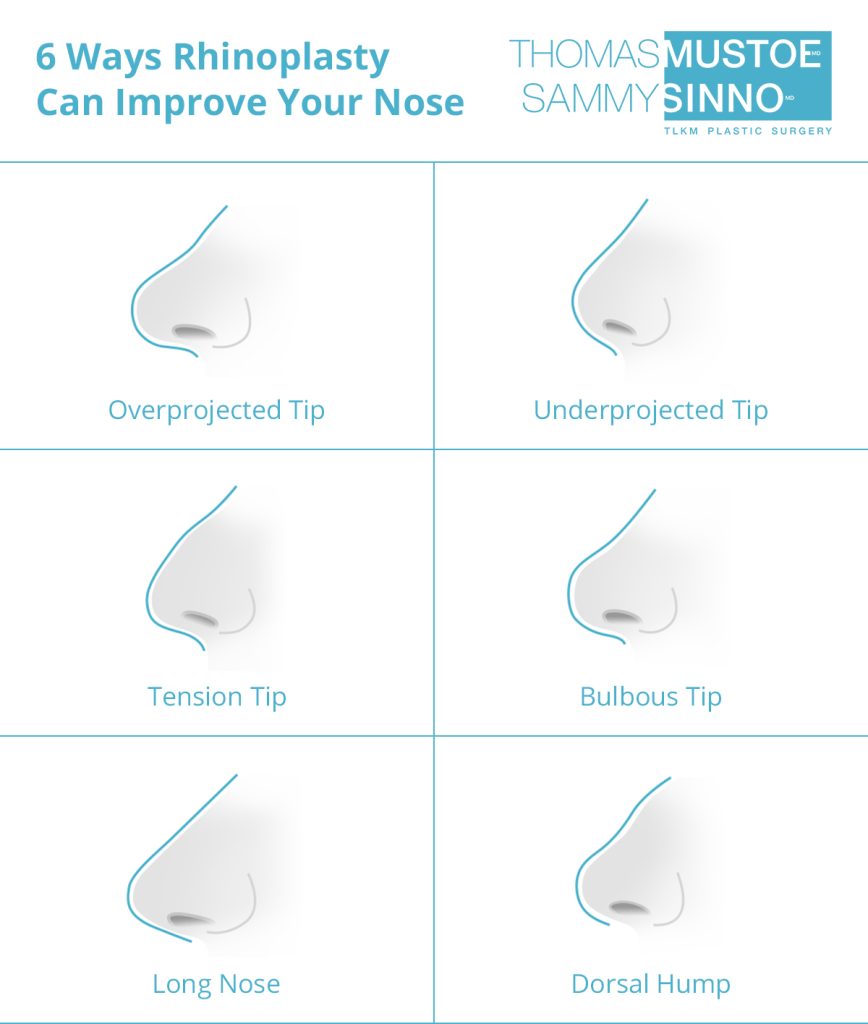
A dorsal hump is a bump along the bridge of the nose caused by excess bone, cartilage, or both. It’s most noticeable from the profile view and is one of the most common cosmetic complaints rhinoplasty surgeons hear from patients.
During rhinoplasty, the surgeon carefully smooths and reshapes the bridge while preserving structural support. Modern techniques focus on maintaining natural contours so the nose looks balanced rather than overly reduced or “scooped out.”
For many patients, even a subtle reduction of the hump can soften the facial profile and improve harmony between the nose, chin, and forehead.
2. Refining a Bulbous or Wide Nasal Tip
Some patients feel the tip of their nose appears too round, wide, or poorly defined. A bulbous tip is often related to the shape and strength of the underlying cartilage or the thickness of the nasal skin.
Tip refinement rhinoplasty can reshape cartilage, narrow the tip, and improve definition while maintaining a natural appearance. This type of surgery requires precision because over-reduction can create an artificial or pinched look.
Experienced rhinoplasty surgeons focus on preserving proper support so the nose continues to age naturally and function well long term.


3. Correcting an Overprojected or Underprojected Tip
Nasal projection refers to how far the nose’s tip extends outward from the face. When the tip projects too far, the nose can appear dominant or overly prominent. If the projection is insufficient, the nose may look flat or lack definition.
Rhinoplasty can adjust tip projection to create more balanced facial proportions. Surgeons may reduce excess cartilage in overprojected noses or use cartilage grafting techniques to improve support and projection in underprojected noses. An underprojected nasal tip is also one of the most common reasons for revision rhinoplasty.
Achieving the right balance is critical because even small changes can dramatically affect facial aesthetics.
4. Improving Nasal Symmetry
Perfect facial symmetry does not exist, but noticeable nasal asymmetry can draw attention away from other facial features. Patients often seek rhinoplasty to correct a crooked nose, uneven nostrils, or asymmetry caused by genetics or previous injury.
In some cases, asymmetry develops after a prior rhinoplasty due to scar tissue formation or healing irregularities. Revision rhinoplasty may be recommended to restore balance and improve both appearance and function.
5. Improving Breathing Function
Not all rhinoplasty procedures are purely cosmetic. Many patients undergo functional rhinoplasty to improve airflow and address breathing difficulties caused by a deviated septum, nasal valve collapse, injury, or structural abnormalities.
Functional rhinoplasty can improve:
- Chronic nasal congestion
- Difficulty breathing during exercise
- Snoring related to nasal obstruction
- Airflow problems after trauma
- Structural collapse from prior surgery
In many cases, functional improvements can be combined with cosmetic refinements during the same procedure.
6. Restoring Facial Harmony After Injury or Aging
Trauma from sports injuries, accidents, or nasal fractures can alter the shape and function of the nose. Rhinoplasty can reconstruct damaged structures, restore symmetry, and improve breathing after injury.
Choosing an Expert Rhinoplasty Surgeon
Rhinoplasty is widely considered one of the most technically demanding cosmetic procedures because the nose must look natural from every angle while still functioning properly. Surgeons must carefully balance aesthetics, breathing function, skin thickness, cartilage support, and long-term stability.
Review my online gallery of before & after photos to get a better idea of what can be done. In each case, changes to the nose’s internal framework can make a big cosmetic difference.
The best way to determine whether you are a good candidate for rhinoplasty — either cosmetic or functional — is to consult with a board-certified plastic surgeon who specializes in the procedure and has a proven track record of excellent results. Review this blog post or contact us online for answers to questions about rhinoplasty. You’re welcome to give us a call at (312) 788-2560 as well.
Leave a Reply