

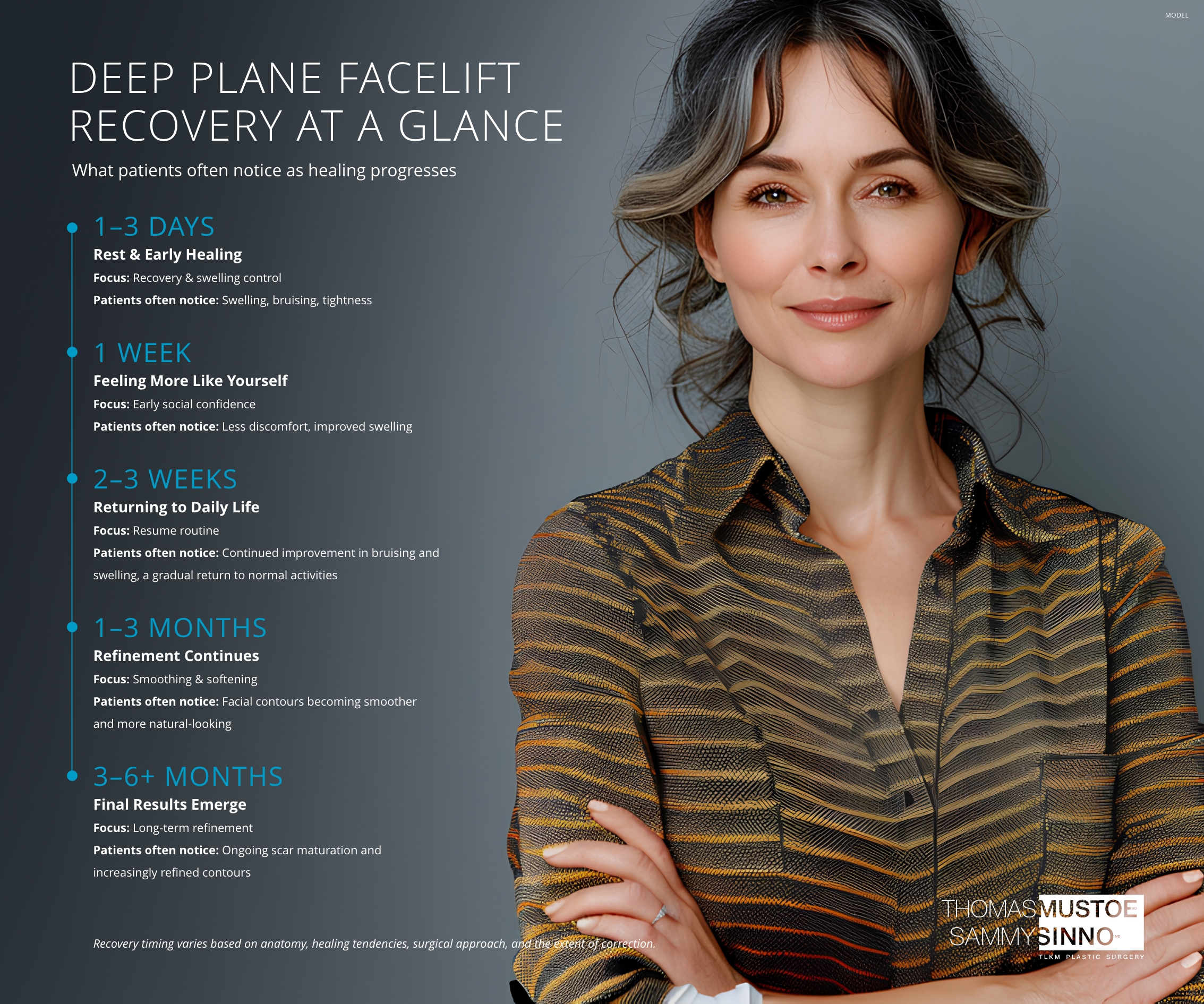
Recovery after a deep plane facelift depends on your anatomy and healing process, as well as the surgical approach. In general, most patients can expect visible swelling and bruising to improve significantly within the first 2 weeks, though healing continues gradually over several months. Social recovery often occurs sooner than patients expect, while final refinement takes longer.
Expertise To Support a Smooth Recovery
At TLKM Plastic Surgery, a smooth recovery begins with meticulous surgical planning, refined technique, and an individualized approach to facial rejuvenation.
As an early pioneer of the deep plane facelift with IV sedation rather than general anesthesia, I have performed this technique exclusively for decades. My refined approach avoids a submental incision and delivers exceptionally natural-looking face and neck rejuvenation with enhanced safety and recovery.
Dr. Sinno employs a hybrid deep plane (dual-plane) facelift approach that prioritizes natural face and neck rejuvenation, balanced results, and individualized recovery planning and recommendations.
While our techniques differ in some ways, both facelift approaches emphasize meticulous tissue handling, minimal bruising, and thoughtful postoperative care.


What Does a Deep Plane Facelift Recovery Timeline Look Like?
During the weeks and months after a deep plane facelift, most patients focus on reducing swelling, resting, and gradually returning to light daily activities.
1–3 Days: Rest and Early Healing
Mild swelling, bruising, tightness, and fatigue are common, though discomfort is often less significant than many patients expect. Light walking and gentle movement are encouraged, while strenuous activity and social commitments should wait.
1 Week: Feeling More Like Yourself
At 1 week post-op, many deep plane facelift patients feel noticeably better. While some swelling or bruising may still be visible, patients typically feel much more “back to themselves.”
Some feel “restaurant ready” or comfortable running errands with sunglasses, strategic hairstyling, or light makeup. Others prefer additional recovery time before socializing.
2 to 3 Weeks: Resuming Daily Activities
Most patients can resume light activity, return to nonstrenuous work, and perform routine daily tasks comfortably. Temporary numbness in the cheek area is possible, but it usually subsides gradually.
Gentle self-care is still advised, including caring for incisions, staying hydrated, and eating healthy meals. You are typically cleared to resume more strenuous activities within 4 to 6 weeks.
3 to 6+ Months: Final Results Are Visible
Swelling has significantly diminished, and meticulous surgical techniques ensure that your facelift incisions are virtually unnoticeable. Scar therapies further minimize “evidence” of facelift surgery. At this stage, you can expect to look and feel like a younger, more confident you.
Patients who undergo a more targeted, less invasive mid facelift or mini facelift may experience a shorter recovery time.
What Affects Recovery Timing?
Deep plane facelift recovery at TLKM Plastic Surgery varies based on factors such as your age, skin quality, the surgical technique, and individual factors. Let’s take a closer look:
| Factor | How It May Influence Recovery |
| Age & Skin Elasticity | Patients with stronger skin elasticity may notice swelling resolve more quickly, while more mature or lax skin can require additional healing time. |
| Extent of Correction | More comprehensive rejuvenation may mean slightly more swelling or downtime than less extensive correction. |
| Healing Tendencies | Every patient bruises and heals differently based on genetics, circulation, and lifestyle. |
| Surgical Technique & Recovery Protocol | Recovery can vary based on incision placement, type of anesthesia, and overall surgical approach. |
| Lifestyle Factors | Sleep, hydration, nutrition, and nicotine avoidance all support smoother healing. |
Do Drains Affect Deep Plane Facelift Recovery?
Depending on the surgical approach, some facelift patients recover with drains, while others do not. Certain facelift protocols use temporary drains to help remove fluid buildup during the earliest phase of healing, which are removed shortly after surgery. Other approaches do not require drains.
Dr. Sinno and I ensure you fully understand your recovery expectations in advance so there are no surprises after surgery.
How Long Does Swelling and Bruising Last After a Deep Plane Facelift?
Most noticeable swelling and bruising substantially improve by 2 weeks post-op, though subtle healing continues for several months. At 6 to 8 weeks, lingering swelling is often difficult for others to notice. Small changes continue as tissues soften, settle, and refine over time. Healing is highly individualized, and it’s essential to follow your personalized recovery plan.
To improve visible postoperative bruising, we offer TLKM Plastic Surgery patients an advanced laser treatment.
Do Deep Plane Facelift Scars Heal Well?
Yes, deep plane facelift scars are typically well-concealed and begin to blend with the natural skin tone as healing progresses.
A common concern among patients is whether surgery will look obvious. In most cases, facelift incisions are carefully placed around the ears, along the hairline, and within natural contours to minimize visibility.
The modern facelift techniques I’ve pioneered are designed to support refined scar healing while avoiding an overly tight or “pulled” appearance. Scar maturity takes time, but most patients find that scars continue to fade and soften over the months following surgery, until they are barely perceptible.
What Is the Difference Between Physical Recovery & Social Recovery?
“Physical recovery” refers to when it’s safe to return to work and other daily activities, while “social recovery” indicates when you feel comfortable and confident socializing and attending events. It’s essential to note that healing and social confidence do not always happen at the same pace: You may feel physically well before swelling has fully resolved.
Our team will help you plan how far in advance you should schedule your procedure if you have an upcoming special occasion or major event.
How Can You Prepare for a Smooth Recovery?
Preparing for recovery starts with choosing the right board-certified plastic surgeon with extensive training in deep plane facelifts and understanding what healing realistically looks like.
During your consultation, we discuss your goals, anatomy, recovery expectations, and lifestyle so you feel prepared for the weeks after surgery, not just the procedure itself.
What’s Next?
At TLKM Plastic Surgery, our goal is natural-looking rejuvenation, with a recovery experience tailored to your needs, lifestyle, and long-term results. Request a consultation by completing the online form or calling our Chicago practice at (312) 788-2560.
Leave a Reply